
Your CRM, part of every call.
Connect HubSpot so your voice agent looks up the caller, works with their contacts, deals and companies, and logs notes, tasks and calls while the conversation happens.
What your agent can do
with HubSpot.
Reads during the call
- Contacts, found by phone number, name or email
- Deals and companies linked to the contact
- Open tasks on the contact
Writes back
- New and updated contacts
- Deal and company updates
- Follow-up tasks and notes
- A logged call activity on the contact
Look-up actions
- Search Contact
- Get Contact
- List Contact Deals
- Get Deal
- List Contact Companies
- Get Company
- List Contact Tasks
Update actions
- Create Contact
- Update Contact
- Update Deal
- Update Company
- Create Task
- Create Note
- Log Call Activity
A call, start to finish.
- Caller rings
The agent searches HubSpot by the caller’s number and greets them by name.
- During the call
It checks the open deal and answers with what is on record.
- Wrapping up
It creates a follow-up task, adds a note and logs the call on the contact.
Example workflow. Your agent runs only the actions you add, with the inputs you choose.
How to connect HubSpot.
Step by step, with screenshots.
You will need: A HubSpot service key or private app access token
01In HubSpot
Open Service Keys in HubSpot
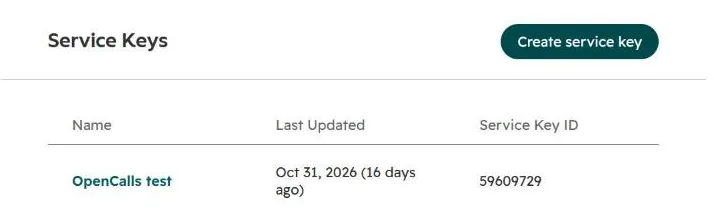
In HubSpot, open Development, then Keys, then Service Keys, and click Create service key. Older accounts can use a private app under Development, then Legacy Apps, instead.
Name the key and add scopes
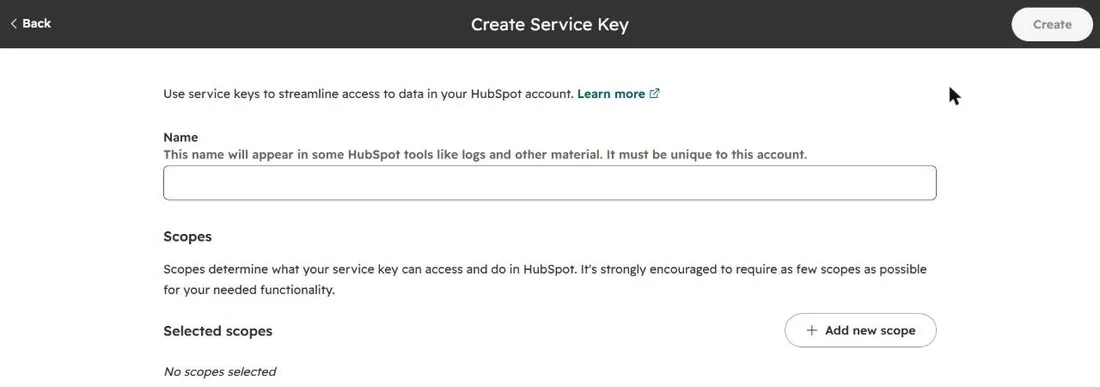
Give the key a name and add the CRM scopes for contacts, companies, deals, tasks, notes and calls, then click Create.
Copy the key
On the key’s page, click Copy. Treat it like a password.

02In OpenCalls
Open Integrations in OpenCalls
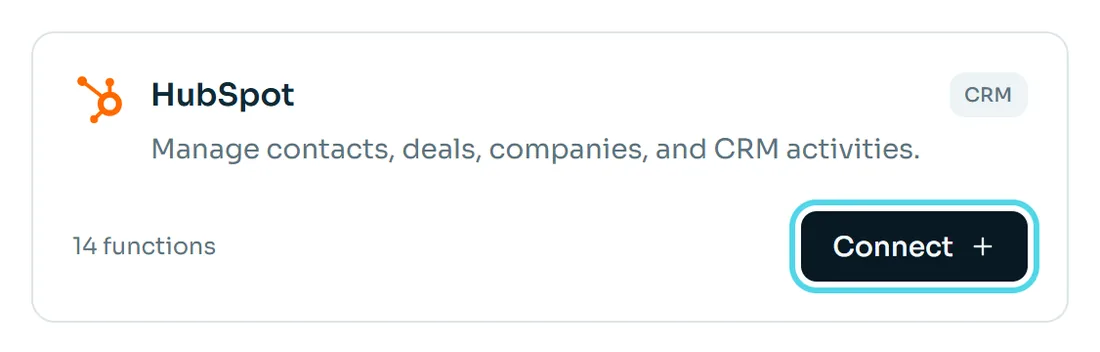
Go to Integrations, open the Available tab and click Connect on the HubSpot card.
Enter your connection details
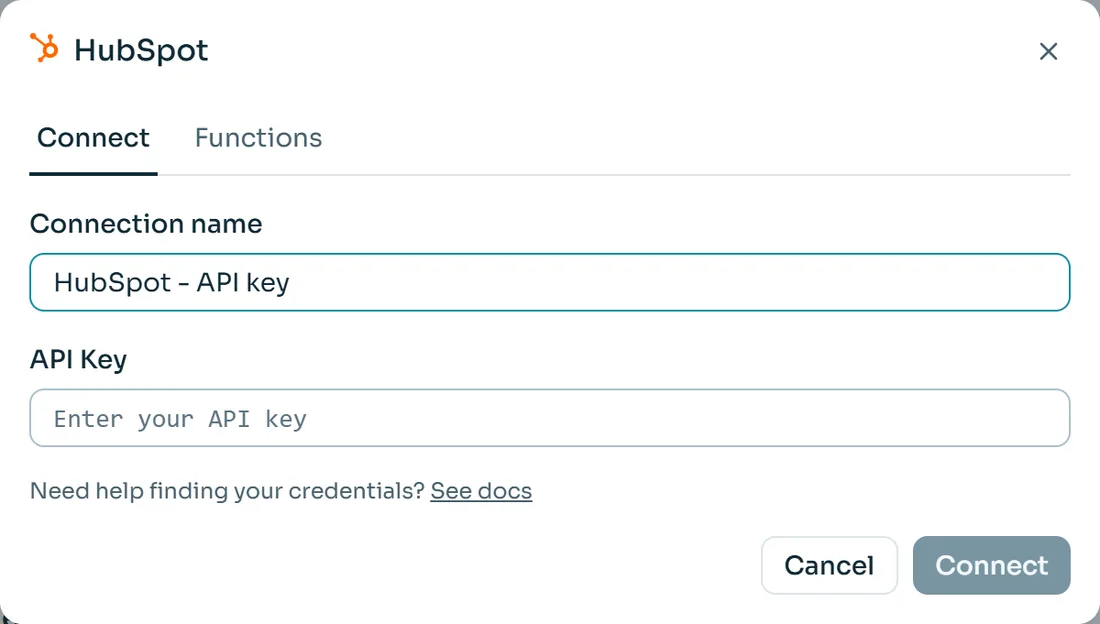
Paste the access token as the API Key. Keep or change the connection name, then click Connect.
03Use it in your agent
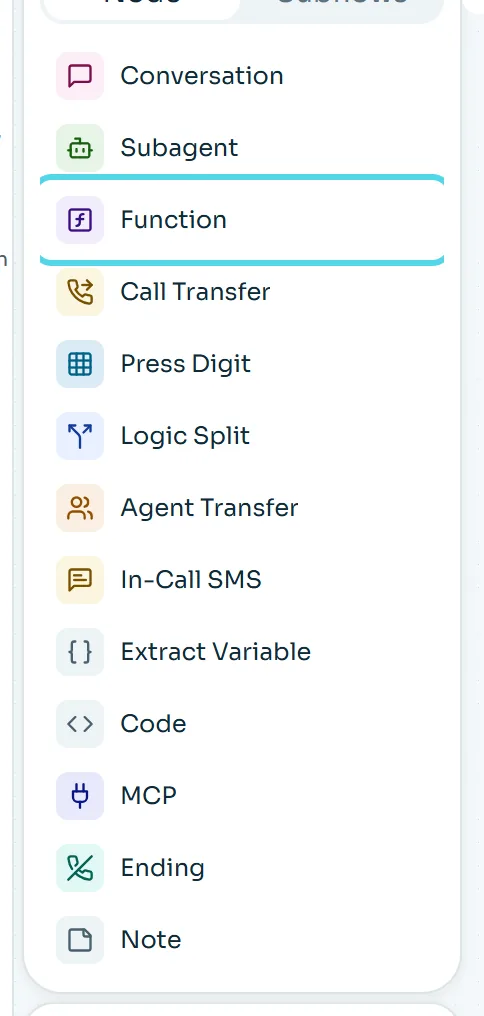
Add a Function node
Open your agent’s flow and click Function in the Node panel.
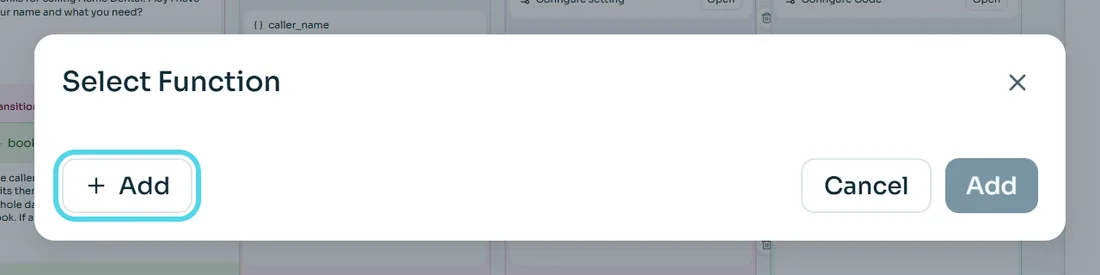
Click Add
In Select Function, click Add to pick a new function.
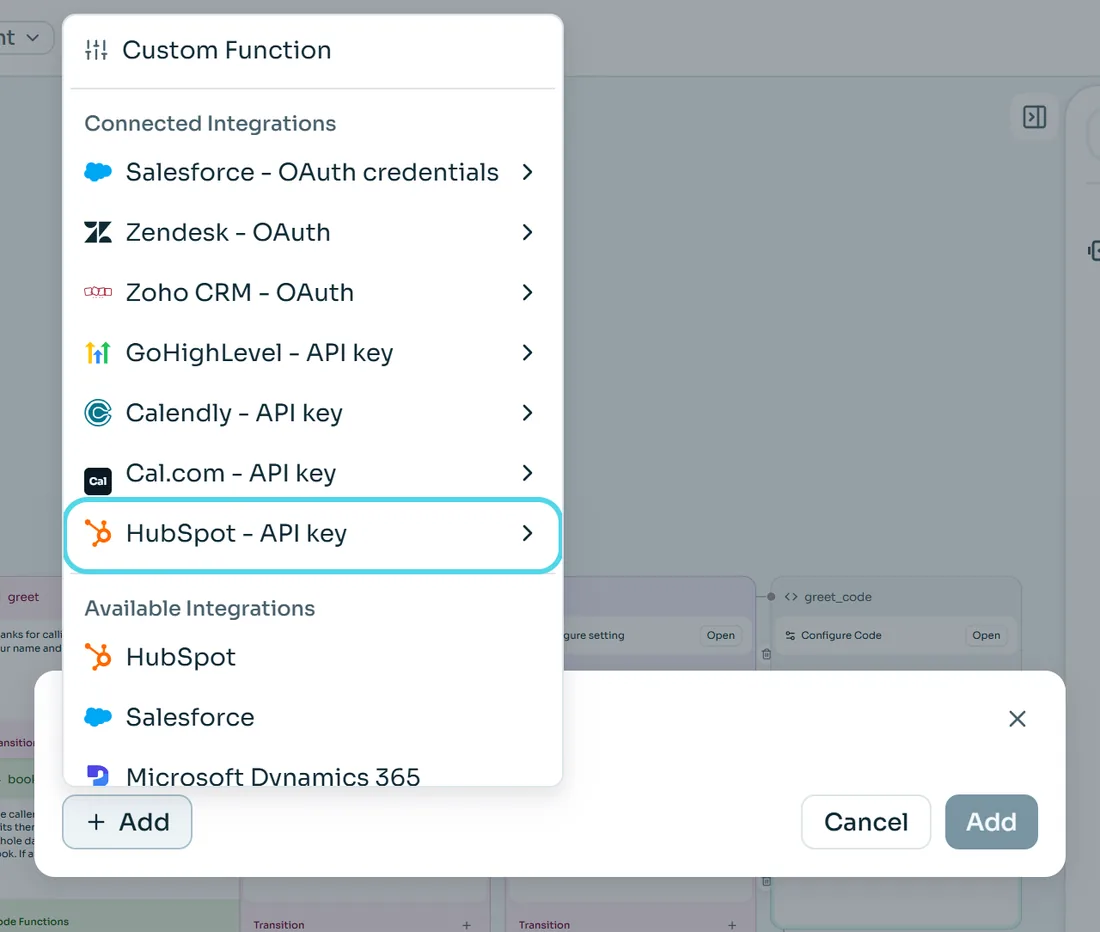
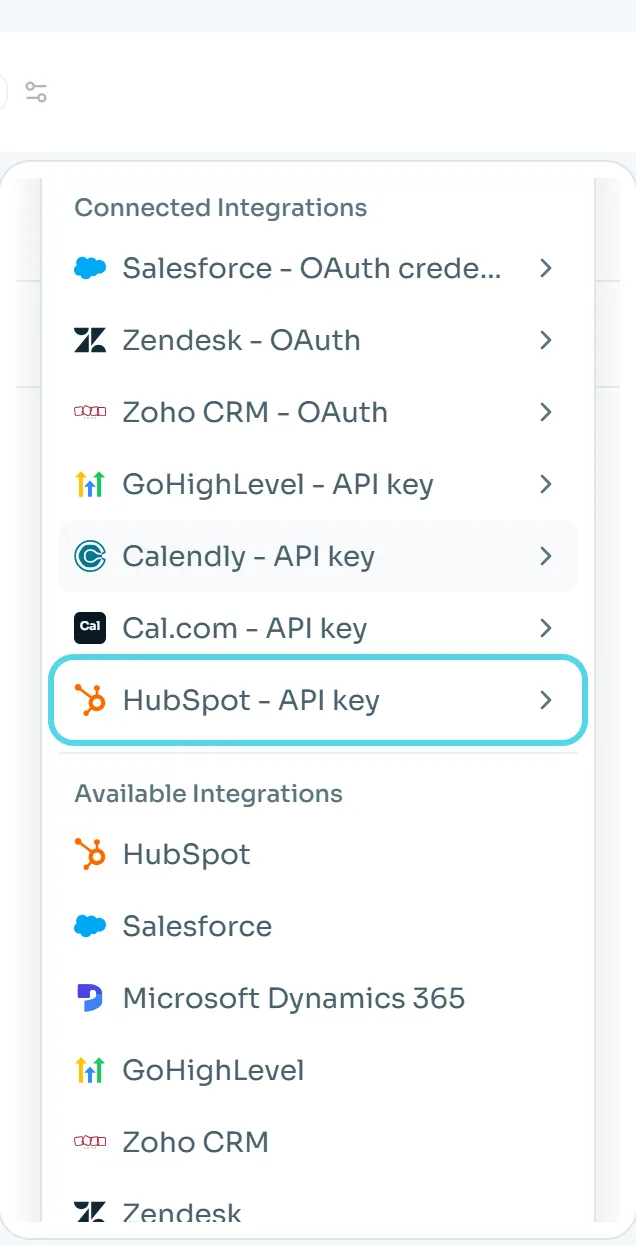
Choose your HubSpot connection
Your HubSpot connection is listed under Connected Integrations.
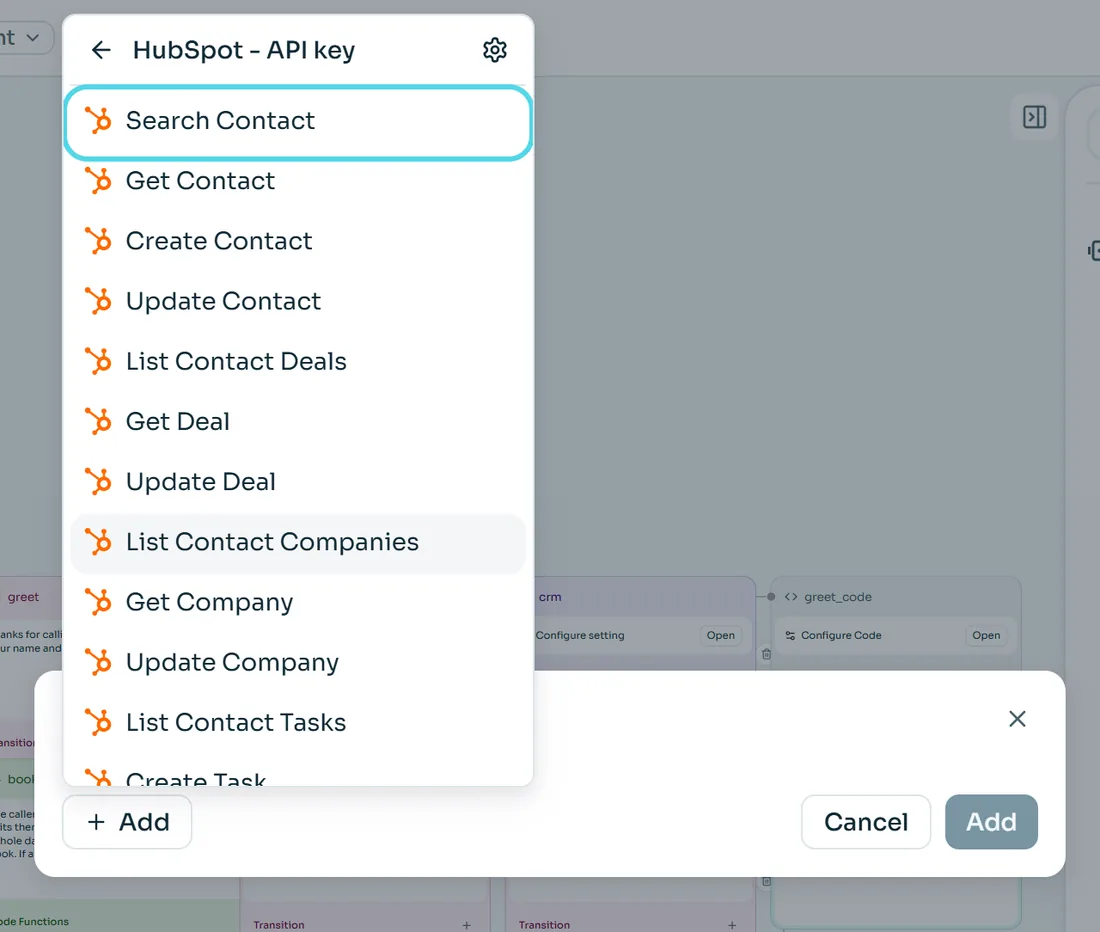
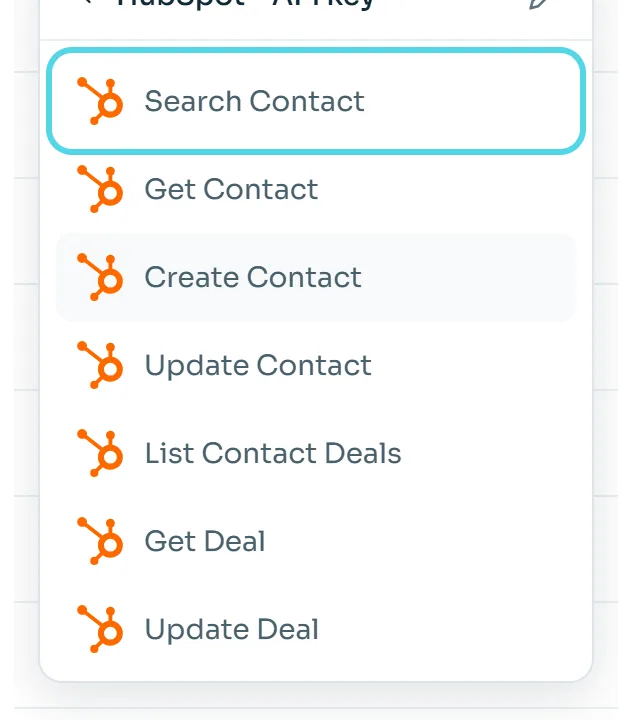
Pick the function
Choose what the node should do, for example Search Contact.
Set the inputs and save
For each input, let the AI decide or give it a value or a variable such as {{user_number}}. Use Run a test to try it, map what comes back on the Output tab, then click Save and Add.
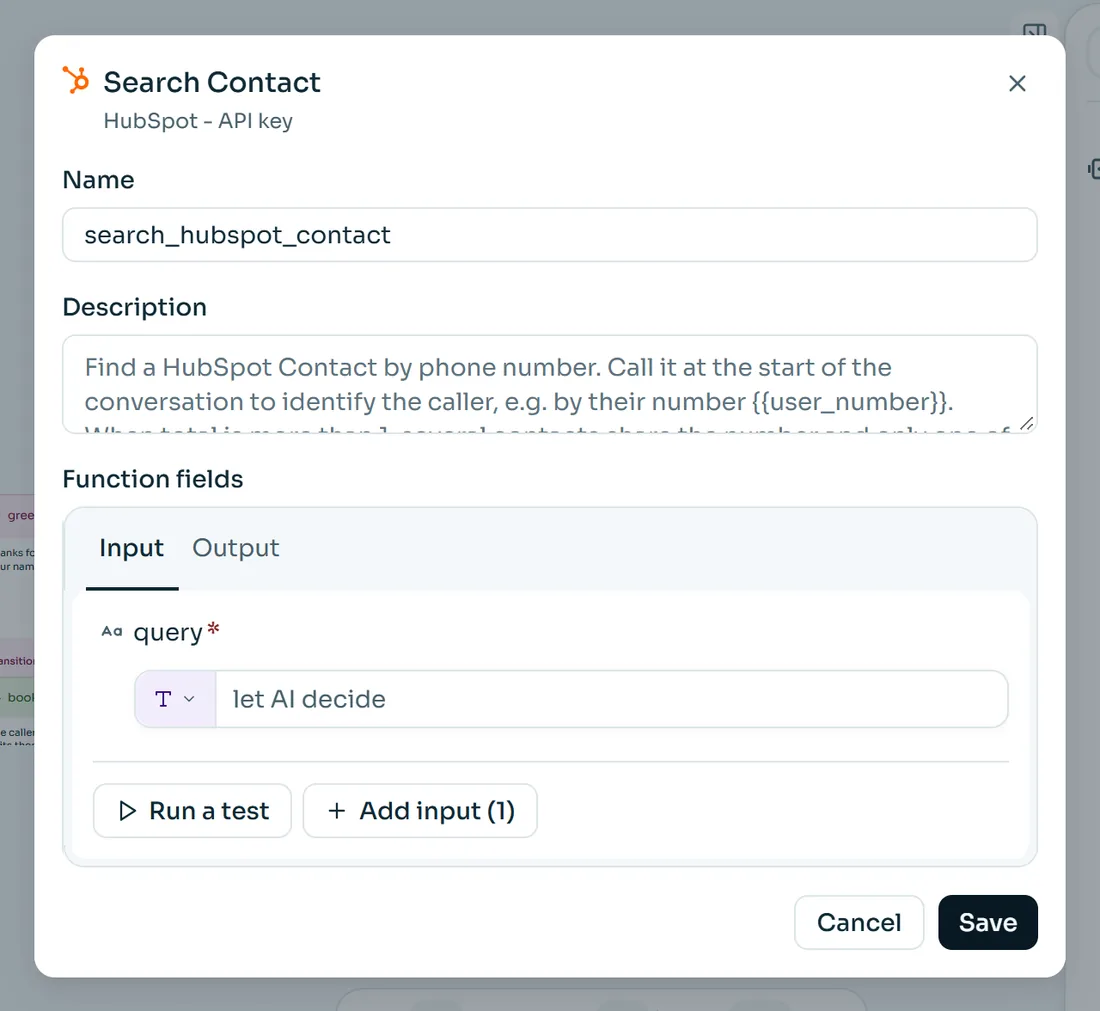
Connect the node and test
Link the Function node into your flow with transitions, then run a simulation or a test call before you publish.
Open Functions and click Add
In your single prompt agent, open Functions and click Add. Your HubSpot connection is listed under Connected Integrations.
Pick the function
Choose the function the agent may call, for example Search Contact.
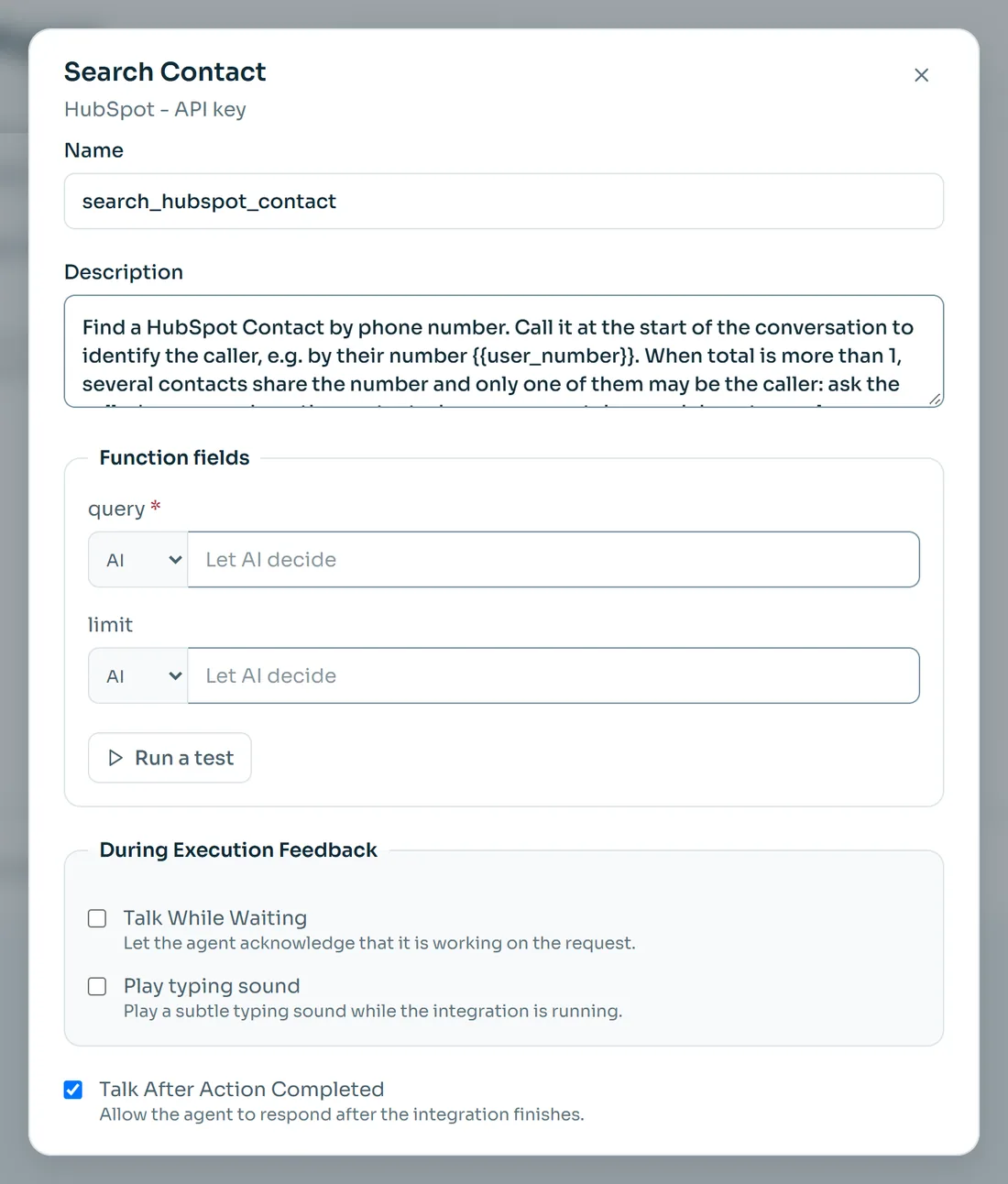
Check the settings and save
Check the name and the description the agent reads, choose for each field whether the AI fills it or you fix a value, try it with Run a test, then click Save. Mention the function in your prompt so the agent knows when to use it.
Test before you publish
Save the agent, then try it with a test call or a simulated chat. Publish when it behaves the way you want.
Before you get started.
Does every call update HubSpot automatically?
Only the functions you add run, when the agent or a flow step calls them. You decide which records an agent may change.
What if two contacts share a number?
The search tells the agent how many contacts matched, and the agent asks for the caller’s name before it uses any record.